The Best Bathroom Mirror Buying Guide (2026)
Prices and picks verified as of September 2026. Independent, reader-supported reviews.


Things to Know Before You Buy
- Size to the vanity, not the wall. A mirror a few inches narrower than your sink base fits the space. Going too wide is the mistake most buyers make.
- The mirror type follows the job. Frameless for a clean budget look, framed for a focal point, LED for better light, and a medicine cabinet or wall cabinet when you need storage.
- Lighting matters more than the glass. A front-lit LED mirror fixes shadowy overhead lighting; a plain mirror reflects whatever light you already have.
- Humidity is the enemy. Exposed edges and wood frames corrode or warp over the years. Sealed edges, metal frames, and a defogger each extend the life of the mirror.
- Plan the mount before you buy. LED and recessed models need an outlet or an in-wall cavity, so confirm power and stud spacing first.
You look at your bathroom mirror every morning, and you probably bought the wrong one. Most buyers grab a rough size, hang it too high, then squint in bad light for the next ten years. A mirror you stay happy with comes down to a handful of decisions, none of them complicated once you know what to look for.
This guide covers all of them: sizing a mirror to your vanity, the differences between frameless, framed, LED, and storage mirrors, how lighting and anti-fog features affect daily use, and the installation details that trip buyers up. The best mirror for you fits your space, suits your lighting, and matches the storage you need. Price and spec count rarely decide it.
Further down, we grouped a few representative options to show what each type looks like at different price points, from a sub-$35 frameless mirror to a full-size LED model. Use them as reference points, not a shopping list. We want you to reach checkout knowing why you are buying what you are buying.
What You Need to Know
Before you compare specific mirrors, understand what separates a good one from a bad one. The glass rarely decides it. Most mirrors use similar float glass with a silver or aluminum backing, so reflection quality stays comparable across the market. The edge treatment, the frame, the mounting hardware, and whatever electronics sit on top are the parts that change from one mirror to the next.
Look at the edge first. A mirror's silvered backing takes on moisture, and in a steamy bathroom it reaches that backing from the perimeter. Older mirrors with a black border show the result, edge corrosion or desilvering. A sealed, beveled, or framed edge slows that down. Cheap frameless mirrors with raw cut edges sit most exposed.
You probably underestimate the mounting. A large mirror weighs a lot, and the hardware plus solid stud anchoring decides whether it hangs flat for a decade or leans and falls. Heavier models use a French-cleat system that spreads weight across the wall; lighter ones rely on D-rings or clips.
Decide early whether you want the mirror to do anything beyond reflect. Built-in LED lighting, anti-fog defoggers, and concealed storage each add cost and installation work. They earn their price only when they solve a problem you have.
Types and Categories
Bathroom mirrors fall into a few clear categories, and the right one depends mostly on your priorities around looks, light, and storage.
Frameless mirrors are the minimalist default. Polished or beveled edges and no frame to date the room let them suit most decor, and they usually cost the least. The exposed edge is the downside, more prone to chipping and corrosion over the years.
Framed mirrors wrap the glass in wood, metal, or composite. The frame protects the edge, hides the mounting hardware, and acts as a design accent. A black metal frame reads modern or farmhouse; a warm wood frame reads traditional. Metal frames handle humidity better than wood, which can swell and peel.
LED and backlit mirrors build lighting into the mirror itself. Front-lit models light your face with no shadows; backlit models throw a soft halo for ambiance. Most include a defogger and adjustable color temperature, but they need power and cost more.
Medicine cabinets and wall cabinets trade a flat profile for storage. Surface-mount versions sit proud of the wall and install on any surface, while recessed versions tuck into the wall cavity for a near-flush look but need a cut between studs. Reach for one when counter clutter is your real problem.
How to Choose
Start with size, because it constrains everything else. Measure the width of your vanity or sink base and subtract a few inches. A mirror that stops short of the counter edges looks intentional, while one that runs wall to wall feels heavy and overhangs the cabinet. For height, center the mirror at eye level for the average user, leaving roughly 5 to 10 inches of gap above the backsplash. Over a double vanity, run one long mirror or hang two centered over each sink; two mirrors read more custom and cost more.
Next, settle the style and frame question against your room. If the bathroom already has a lot going on (patterned tile, a bold vanity, decorative lighting), a frameless or thin-framed mirror keeps things calm. If the room is plain, a framed mirror is the easiest way to add character. Match the frame finish to your hardware: black metal with matte black faucets, brushed nickel with chrome fixtures.
Then decide on lighting and features. If your overhead light casts shadows on your face, an LED mirror is worth the premium and the wiring. If your bathroom fogs up, prioritize a built-in defogger over a separate anti-fog spray you have to reapply. If your counter stays cluttered, a medicine cabinet earns its keep more than any lighting feature.
Finally, confirm the practical details before you commit: is there an outlet near where an LED mirror will hang, are your walls standard studs for a recessed cabinet, and does the mounting hardware match your wall type? Set a budget range, then choose within it on fit and features rather than chasing the longest spec list.
Common Mistakes to Avoid
The most common mistake is buying a mirror that is too big. You measure the wall instead of the vanity, hang one that overhangs the cabinet on both sides, and the whole vanity looks crowded. Size to the sink base, not the empty wall above it.
The second mistake is hanging it too high. A mirror mounted to fit the tallest person in the house leaves shorter users looking at their own forehead. Center it at eye level for the people who use it most, and keep the bottom edge close enough to the backsplash that it reads as part of the vanity.
Third, you ignore the lighting and then blame the mirror. A mirror cannot create light; it reflects what is there. If you shave or do your makeup in shadow, you have a lighting problem, and an LED mirror or better vanity sconces fixes it where a fancier plain mirror will not.
Finally, you underestimate humidity and mounting. A bare-edged frameless mirror or a wood frame in a steamy, under-ventilated bathroom shows edge corrosion or warping within a few years. A heavy mirror hung on drywall anchors alone, with no studs behind it, is a slow-motion accident. Run the exhaust fan, seal the edges where you can, and anchor heavy mirrors into studs.
Care and Maintenance
A bathroom mirror stays new on two things: how you clean it and how you manage moisture. For everyday smudges, reach for a microfiber cloth with a little glass cleaner or a 50/50 mix of distilled water and white vinegar. Spray the cloth, not the glass. That keeps liquid from running to the bottom edge and seeping behind the backing, where desilvering starts.
Skip harsh abrasives, ammonia-heavy cleaners on framed mirrors, and anything that pools at the edges. On framed models, wipe the frame on its own and dry it; standing water warps wood frames and dulls metal ones over time. For LED mirrors, switch the unit off, keep the touch sensor dry, and keep cleaner away from the power connection.
Ventilation does the most for a mirror's lifespan. Run your exhaust fan during a shower and for ten to fifteen minutes after, and it pulls humidity out before it reaches the mirror's edges or a nearby cabinet. A defogger mirror's heating element clears the fog, but the fan still guards the edges over the long run.
Inspect the bottom edge once or twice a year. Catch a small spot of black corrosion early and a clear edge sealant can slow it. Catch it late and the desilvering spreads, and the mirror is on borrowed time.
Our Top Picks
These three options are reference points rather than a ranked verdict. Each one shows what a different mirror type looks like at a given price level. Use them to anchor your own decision: a full-size LED model, a storage-first medicine cabinet, and a framed statement mirror.
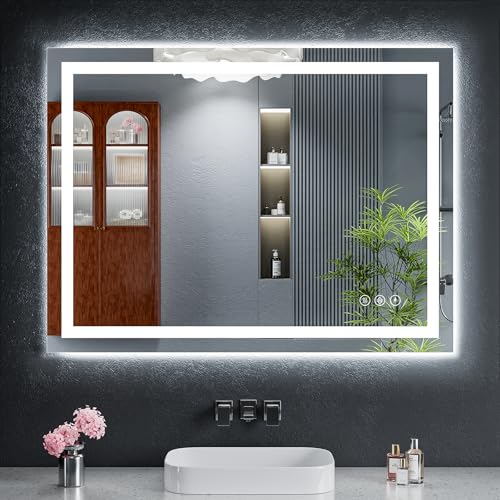
Editor's Pick
40"x30" LED Bathroom Mirror with
A full-size 40-by-30-inch LED mirror with even front lighting, adjustable color temperature, and a built-in defogger. Buy this type if your overhead lighting is the weak point.
$119.99
Check Price on Amazon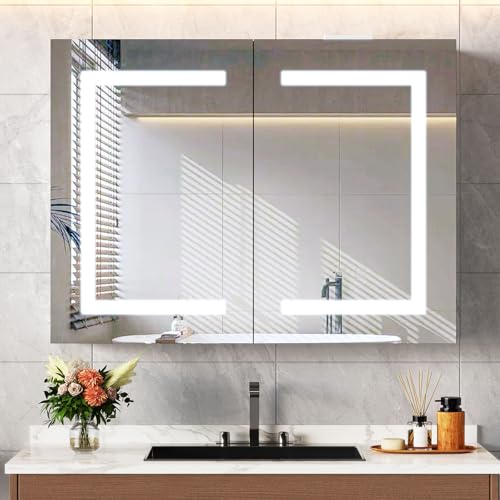
Best Value
Snughome Bathroom Medicine Cabinet with
A mirrored medicine cabinet that hides shelving behind the glass. The right pick when counter clutter is the problem you need to solve.
$148.99
Check Price on Amazon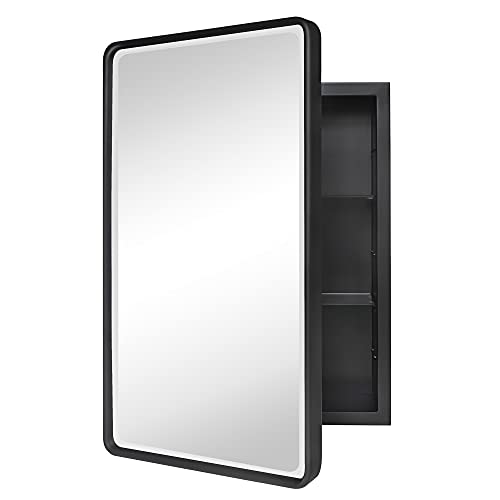
Premium Choice
TEHOME Farmhouse Black Metal Framed
A black metal framed mirror that doubles as a focal point. The painted metal frame shrugs off humidity better than wood and suits modern, transitional, and farmhouse bathrooms.
$139.99
Check Price on AmazonWhat size bathroom mirror should I get for my vanity?
Keep your mirror a few inches narrower than the vanity or sink base so it does not overhang the edges.
Are LED bathroom mirrors worth it?
If your bathroom has weak or unflattering overhead lighting, an LED mirror is one of the cheapest upgrades you can make.
Frequently Asked Questions
What size bathroom mirror should I get for my vanity?
Are LED bathroom mirrors worth it?
Should I choose a framed or frameless mirror?
How high should a bathroom mirror be hung?
How do I stop my bathroom mirror from fogging up?
Verdict
The right bathroom mirror matches your room and your routine. Get the size right first, a few inches narrower than the vanity and centered at eye level, and you have dodged the mistake most buyers make. From there, let your problem pick the type: a framed or frameless mirror on looks and budget, an LED model if your lighting is poor, a medicine cabinet if you are short on storage. Mind the unglamorous details too, because the edge sealing, the frame material, and the mounting hardware decide whether your mirror still looks good in five years or shows a black border. Spend on the feature that solves a real problem, skip the ones that do not, run your exhaust fan, and a good mirror does its job each morning without you thinking about it again.