How to Clean Bathroom Mirror At Home (2026)
Prices and picks verified as of September 2026. Independent, reader-supported reviews.


Things to Know Before You Buy
- You do not need a specialty spray. White vinegar mixed with water cuts through toothpaste film, hairspray residue, and everyday grime as well as most bottled glass cleaners.
- Never spray cleaner straight onto an LED or lighted mirror. Moisture that seeps behind the panel can damage the wiring, so mist your cloth instead and wipe the glass from there.
- A five-step routine, dust, spray, wipe, buff, and inspect, handles nine out of ten bathroom mirrors without a second pass.
- Distilled water beats tap water in this recipe because it leaves no mineral residue behind as it dries.
- The full job takes about fifteen minutes and uses supplies most households already keep under the sink.
If you want to know how to clean bathroom mirror at home without buying a single specialty product, the answer is already sitting in your kitchen cabinet. White vinegar, water, and two soft cloths cut through the toothpaste flecks, hairspray haze, and hard water spots that build up on a bathroom mirror in a normal week, and the whole job takes about fifteen minutes.
The routine below breaks the job into five steps: dust the glass, mix a simple cleaner, spray the cloth instead of the mirror, wipe in one direction, and buff the surface dry. Skip a step or rush the order and you trade one mess for another, usually a streaky haze that looks worse under bright vanity lighting than the dust ever did. Follow the sequence once and you have a routine you can repeat every week in the same fifteen minutes.
What You'll Need
- Supplies: white vinegar, distilled water, and a drop of dish soap for greasy fingerprints
- Tools: two microfiber cloths and a spray bottle
Step 1: Clear the counter and dust the mirror
Before you clean a bathroom mirror at home, clear the counter underneath it. Toothbrush holders, soap dispensers, and skincare bottles catch overspray and get in the way of a full wipe, so setting them aside first means you never work around them mid-pass.
Run a dry microfiber cloth over the entire mirror, glass and frame both, to lift loose dust, hair, and lint. Dry debris turns into gray streaks the instant it meets a wet cloth, so pulling it off first saves you a second cleaning pass later. Check the top edge and corners closely, since dust collects there and hides in shadow until the overhead light catches it.
If the mirror hangs above a sink you use for shaving or styling, look for dried spatter near the bottom edge. A dry cloth loosens most of it on its own and shows you exactly where the next step needs extra attention.
Step 2: Mix a vinegar-and-water cleaning solution
You do not need a store-bought glass cleaner to clean a bathroom mirror at home. Fill a spray bottle with equal parts white vinegar and distilled water, and you have a solution that cuts through toothpaste flecks and hairspray film for pennies. Distilled water matters here because tap water carries minerals that dry into faint spots on the glass.
If your mirror collects greasy fingerprints or sticky hair product, add a single drop of dish soap to the bottle and shake it gently to combine. The soap breaks down oils that vinegar alone struggles to lift, but more than a drop leaves its own film, so go light.
Label the bottle if you plan to keep the mix around, and skip anything with added wax or shine additives. Those coat the glass with the same haze you are trying to remove, and it builds with every cleaning instead of going away.
Step 3: Spray the cloth, not the mirror
Spray your cleaning solution onto the cloth, not directly onto the glass. Liquid sprayed straight at the mirror runs down behind the frame, where it can rot the backing and cause the dark edge spots that no amount of buffing removes. This one adjustment prevents most of the permanent damage that shows up on older mirrors.
The rule matters even more if your mirror has built-in LED lighting or a defogger. Moisture that seeps behind a lighted panel can reach the wiring and cause it to fail, so keep the spray on the cloth at all times and never mist the mirror while it is plugged in or powered on.
A cloth that is damp, not dripping, is what you want. If liquid drips off the cloth when you hold it up, you have used too much, and you spend the next step chasing streaks instead of preventing them.
Step 4: Wipe the glass in straight, overlapping lines
Starting at the top corner, wipe the glass in straight lines, working left to right and then dropping down slightly for each overlapping pass. Circular wiping pushes grime around the same six inches of glass instead of moving it off the surface, which is why round motions leave the swirl marks you see under bright light.
Work in one direction and you can see exactly which section you have already covered, so you never miss a strip or double back over a spot that is already clean. For a tall mirror, an S-pattern from top to bottom covers the whole surface in one continuous motion without retracing your steps.
Switch to a fresh cloth if it starts sliding instead of gripping, since a saturated cloth spreads the same film around instead of lifting it away.
Step 5: Buff dry and check the mirror under real light
Switch to a second cloth, one that is completely dry, and buff the entire mirror in the same top-to-bottom pattern you used to clean it. This final pass lifts any leftover moisture before it can dry into a spot, and it is the step most people skip when they are in a hurry.
Check your work under real light rather than the dim glow of an overhead fixture. Turn on the vanity lights, or hold your phone flashlight at an angle across the glass, and streaks that were invisible a moment ago show up clearly. Raking light like this catches the faint marks that room lighting hides.
Touch up any spot you find with a corner of the dry cloth and a light spritz on the cloth, not the glass. Once the mirror looks clear from every angle, you are finished, and you now have a fifteen-minute routine you can repeat weekly.
Common Mistakes to Avoid
The most common mistake when you clean a bathroom mirror at home is spraying too much cleaner directly onto the glass. Extra liquid does not clean better, it runs behind the frame and leaves more residue for you to chase during the buff. A lightly misted cloth beats a soaked one every time.
Paper towels cause the second most common problem. They shed lint on contact with wet glass and tear apart under pressure, trading one mess for another. Stick with microfiber, and wash those cloths without fabric softener, since softener coats the fibers and turns them into streak generators instead of streak removers.
Cleaning right after a hot shower is another habit worth breaking. Warm, steamy glass dries the cleaner before you can wipe it off, which bakes in the exact streaks you are trying to prevent. Give the bathroom a few minutes to cool and the steam to clear before you start.
Finally, do not overlook the frame while you focus on the glass. Grime creeps in from the border, and a spotless center surrounded by a grimy edge still reads as dirty from across the room. Wipe metal, wood, or painted frames with a separate damp cloth, and let LED or lighted mirrors dry fully before you turn them back on.
Our Top Picks
If your mirror still looks foggy, cracked, or coated in spots no amount of wiping fixes, replacing it solves the problem at the source. These three mirrors pair easy-to-wipe glass with features that cut down on the buildup that makes a bathroom mirror hard to keep clean in the first place.
Editor's Pick
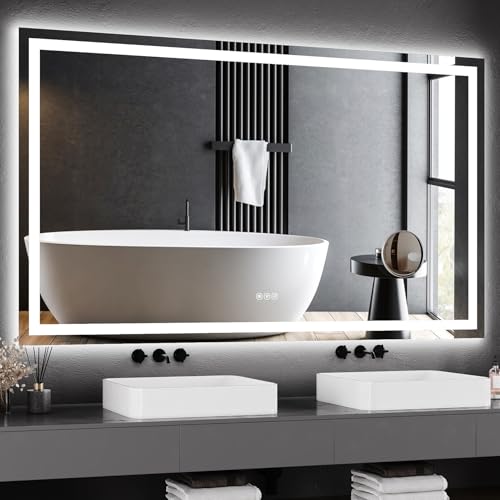
GarveeHome 60x36 LED Bathroom Mirror
The anti-fog pad keeps the center of the glass clear through a hot shower, and the front-lit LED ring makes streaks easy to spot the moment you buff. At 60x36 inches, it also gives you room to clean in long, unbroken strokes instead of working around a small frame.
$186.29
Check Price on Amazon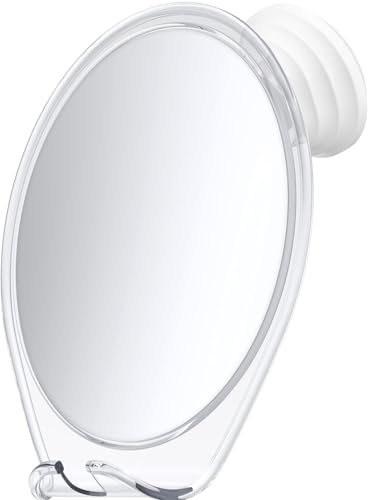
Best Value
HONEYBULL Fogless Shower Mirror with
A compact fogless mirror you hang right in the shower, so soap scum and toothpaste splatter never reach it in the first place. The shatterproof surface wipes clean with a rinse and a quick pass of your hand, so you never need a cloth.
$19.99
Check Price on Amazon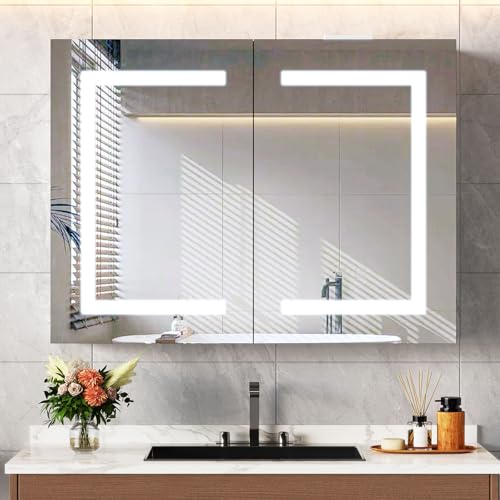
Premium Choice
Snughome Bathroom Medicine Cabinet with
A recessed cabinet with a mirrored door that keeps toiletries out of view and off the counter, which means less splatter reaching the glass to begin with. The hinged door also swings open for wiping both sides without removing anything from the wall.
$148.99
Check Price on AmazonFrequently Asked Questions
What is the best homemade cleaner for a bathroom mirror?
Equal parts white vinegar and distilled water outperforms most store-bought sprays for a fraction of the cost. Add a single drop of dish soap if your mirror carries greasy fingerprints or heavy hairspray film, and mist the cloth rather than the glass.
How do you clean a bathroom mirror without leaving streaks?
Spray your cleaner onto the cloth instead of the glass, wipe in straight overlapping lines rather than circles, and finish with a second, completely dry cloth for the buff. Skipping the dry buff is the single biggest cause of streaks.
Is vinegar safe to use on all bathroom mirrors, including LED models?
Yes, as long as you spray the cloth and not the mirror itself. Moisture that reaches behind an LED panel can damage the wiring, so keep the mirror powered off while you clean it and let it dry fully before turning it back on.
How often should you clean a bathroom mirror?
A weekly wipe keeps most bathroom mirrors clear. If yours sits above a sink used for shaving or styling, or it fogs after every shower, a quick pass every few days stops splatter and water spots from turning into a film that takes real scrubbing to remove.
Can you use Windex on a bathroom mirror?
You can, though the ammonia in most Windex formulas can dull certain anti-fog coatings and tinted or antique glass over time. For coated or lighted mirrors, the vinegar-and-water mix in this guide is the safer default.
Verdict
Once you break it down, how to clean bathroom mirror at home comes down to five moves you can finish in about fifteen minutes: clear the counter and dust the glass, mix a vinegar-and-water solution, spray the cloth instead of the mirror, wipe top to bottom in straight overlapping lines, and buff dry while checking your work under real light. Skip the paper towels, go easy on the spray, and keep two microfiber cloths on hand, one for cleaning and one strictly for the final buff.
If your mirror still fogs, spots, or shows a cloudy edge no matter how carefully you clean it, the glass itself may be past the point cleaning can fix. The GarveeHome 60x36 LED Bathroom Mirror pairs an anti-fog pad with front lighting that makes any leftover streak impossible to miss, which cuts your cleaning time down even further. Either way, the routine above keeps whatever mirror you own looking clear between washes.