How to Clean Bathroom Mirror with Vinegar (2026)
Prices and picks verified as of September 2026. Independent, reader-supported reviews.


Things to Know Before You Buy
- White vinegar cuts mineral deposits and soap scum better than most bottled glass cleaners, and it costs a fraction of the price.
- A microfiber cloth, not paper towels, prevents the lint and streaks that ruin an otherwise clean mirror.
- Keep vinegar solution off wood or metal frames. Overspray can warp a wood edge or corrode metal hardware over time.
- Wiping top to bottom rather than in circles makes streaks easier to spot and catch before the glass dries.
- Skip vinegar on antique or decorative silvered mirrors, since the acetic acid can seep behind the edges and cause the silvering to flake.
How to clean bathroom mirror with vinegar comes down to one ratio: equal parts white vinegar and water, a lint-free cloth, and about fifteen minutes. Steam from hot showers leaves a hazy film on the glass, and toothpaste splatter and hairspray residue build up fast in a small bathroom. Vinegar cuts through all of it because its acetic acid dissolves the mineral deposits and grease that plain water leaves behind.
Most glass cleaners on store shelves rely on ammonia, and ammonia strips the silver backing on antique or tinted mirrors over time while leaving a sharp chemical smell in a small, unventilated bathroom. A vinegar solution costs about a dollar to mix, skips the fumes, and works as well on a plain wall mirror as it does on the glass door of a medicine cabinet. Follow the five steps below and you'll get a streak-free finish that holds up under bathroom lighting, where every smear shows.
What You'll Need
- Supplies: white vinegar, distilled water, microfiber cloth
- Tools: spray bottle, squeegee
Step 1: Mix the vinegar solution
Start by pouring one part white vinegar and one part distilled water into a clean spray bottle, then cap it and shake gently to combine. Distilled water matters here: tap water in many US cities carries dissolved minerals that leave their own faint film on glass, which defeats the point of learning how to clean bathroom mirror with vinegar in the first place.
If your mirror carries heavy buildup from hard water spots or hairspray overspray, bump the ratio to two parts vinegar and one part water for extra cutting power. Label the bottle if you plan to keep it under the sink, since an unlabeled bottle of clear liquid is easy to mix up with something else.
Step 2: Clear dust and loose debris from the mirror
Before any liquid touches the glass, run a dry microfiber cloth over the entire mirror to lift loose dust, hair, and dried toothpaste flecks. Skipping this step is the fastest way to end up rubbing grit across the surface, which can leave faint scratches that show up under bright vanity lighting.
Pay attention to the corners and the seam where the mirror meets its frame or medicine cabinet housing, since dust collects there and migrates outward once you start spraying. A dry pass takes less than a minute and saves you from redoing the whole job.
Step 3: Spray the solution and let it sit
Hold the spray bottle about eight inches from the glass and mist the vinegar solution in a broad, even pattern, covering the whole mirror instead of working in small sections. Keep the spray off the frame edges, especially on wood-framed or metal-trimmed medicine cabinets, since standing solution can dull a wood finish or corrode metal hardware over time.
Let the solution sit for 30 to 60 seconds. That short dwell time gives the acetic acid in the vinegar a chance to break down soap scum, toothpaste splatter, and the hard water spots that plain water can't touch. Don't let it dry on the glass, though, or you'll trade one film for another.
Step 4: Wipe the mirror in a top-to-bottom pattern
Starting at a top corner, wipe the mirror in straight, overlapping strokes moving downward, and turn to a clean section of your cloth every couple of passes. Working top to bottom means any drips run onto glass you're about to clean anyway, instead of streaking back over a section you already finished.
Circular motions tend to smear the vinegar solution instead of lifting it, which is why people who clean a bathroom mirror with vinegar and still see streaks are usually using the wrong stroke pattern. A cotton towel or paper towel leaves lint behind, so stick with microfiber through this entire step.
Step 5: Buff the glass dry with a clean cloth
Once the mirror looks clean, go back over the entire surface with a second, completely dry microfiber cloth to lift any leftover moisture before it air-dries into streaks. Buff in the same top-to-bottom pattern you used for the wet pass, and check the glass at an angle under your bathroom light to catch spots you might have missed head-on.
If a few streaks remain, they usually trace back to a cloth that was already damp or overloaded with vinegar solution. Swap in a fresh, dry cloth for a final pass rather than pressing harder, and the glass should come up clear.
Common Mistakes to Avoid
The most common mistake with vinegar and bathroom mirrors is oversaturating the glass. A heavy spray runs down into the frame seam or the gap around a medicine cabinet door, where it can sit for hours and eventually damage the seal or the wood underneath. Mist lightly and wipe promptly instead.
Using paper towels instead of microfiber is another one. Paper towels shed tiny fibers that stick to a freshly cleaned mirror and catch the light, which undoes the entire point of learning how to clean bathroom mirror with vinegar in the first place. Keep a dedicated microfiber cloth near the sink so you're never tempted to grab a paper towel out of convenience.
Skipping the dry-dust pass is a third mistake, and it's the one that causes the faint hairline scratches people blame on cheap glass years later. Dust plus liquid acts as a mild abrasive, so always wipe the glass dry before you spray anything.
Finally, don't use vinegar on a mirror with an antique or decorative silvered back, since the acetic acid can seep behind the edges over time and cause the silvering to flake. That damage isn't reversible, and it's the one case where a vinegar-free glass cleaner is the safer call. For a standard bathroom mirror or a modern medicine cabinet with sealed glass, vinegar stays one of the cheapest and most effective options you have.
Our Top Picks
If your current mirror is scratched, clouded, or too small to clean effectively, upgrading often costs less than you'd think. These three picks pair clear glass with the kind of sealed edges that make a routine of cleaning your bathroom mirror with vinegar easier to keep up.
Editor's Pick
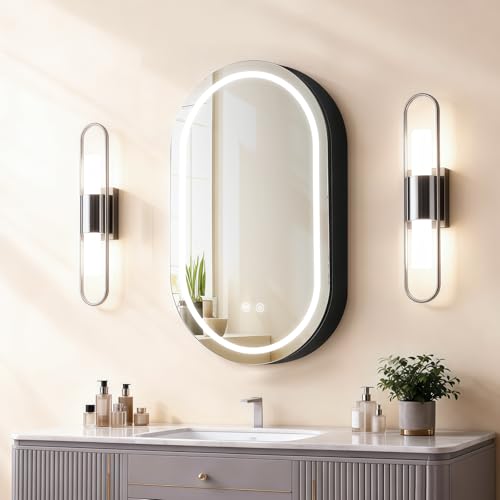
Janboe Oval Medicine Cabinet with
The oval profile and recessed-mount option give this cabinet a built-in look, and its sealed glass edges hold up well to a vinegar-and-water routine without trapping moisture in the frame.
$209.99
Check Price on Amazon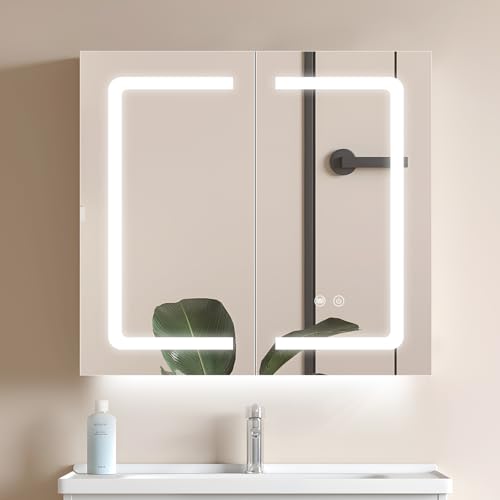
Best Value
Black Bathroom Mirror Medicine Cabinets
A matte black metal frame hides water spots between cleanings, and the flat glass front wipes down fast with a vinegar solution and a microfiber cloth.
$229.99
Check Price on Amazon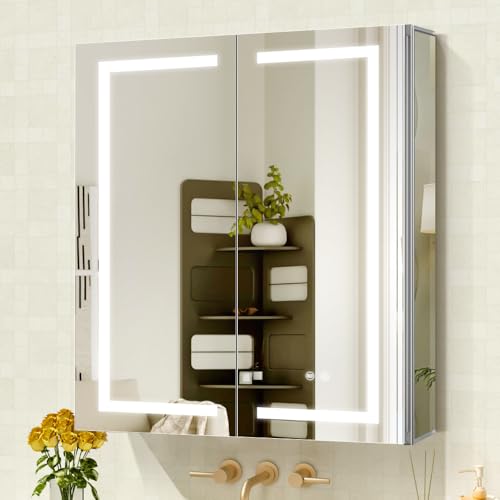
Premium Choice
Janboe LED Medicine Cabinet Bathroom
Built-in LED lighting makes it easy to spot streaks while you clean, and the anti-fog glass sheds moisture fast enough that a vinegar wipe-down dries almost immediately.
$389.99
Check Price on AmazonFrequently Asked Questions
Can I use vinegar on a mirror with a wood frame?
Yes, but spray the vinegar solution onto your cloth first rather than directly onto the glass, and keep the liquid away from the wood edges, since standing moisture can warp or discolor a wood frame over time.
Does vinegar leave a smell on the mirror?
The vinegar smell fades within a few minutes as the solution evaporates, and it clears faster than the lingering chemical smell most ammonia-based glass cleaners leave behind.
How often should I clean a bathroom mirror with vinegar?
Once a week is enough for most bathrooms, though a mirror near a shower with heavy steam exposure benefits from a quick wipe-down two or three times a week to stay ahead of water spots.
Is vinegar safe for tinted or antique mirrors?
No. Skip vinegar on antique or decorative silvered mirrors, since the acetic acid can seep behind the edges and cause the silvering to flake, and reach for a vinegar-free glass cleaner instead.
What's the best vinegar-to-water ratio for streak-free glass?
A one-to-one ratio of white vinegar and distilled water handles most bathroom mirrors, but you can bump it to two parts vinegar for mirrors with heavy hard water spots or built-up hairspray residue.
Verdict
Learning how to clean a bathroom mirror with vinegar comes down to a cheap, repeatable routine: mix equal parts white vinegar and distilled water, dust the glass first, spray it lightly, let it sit for a minute, then wipe top to bottom with a dry microfiber cloth. That five-step process costs about a dollar in supplies and skips the ammonia fumes that come with most bottled glass cleaners, and it works on everything from a plain wall mirror to the glass front of a medicine cabinet.
If your current mirror has gotten too clouded or scratched for vinegar alone to fix, an upgrade solves the problem for good. The Janboe Oval Medicine Cabinet is our pick for most bathrooms: its sealed glass edges and oval profile give the vinegar-and-water routine above a clean surface to work with, week after week, without trapping moisture where it can cause damage. Whichever mirror you own, stick to the ratio, use a lint-free cloth, and skip vinegar on antique silvered glass, and streaks won't be a problem again.