How to Clean Bathroom Mirror without Windex (2026)
Prices and picks verified as of September 2026. Independent, reader-supported reviews.


Things to Know Before You Buy
- Windex and other ammonia glass cleaners can cloud anti-fog coatings, discolor gold or brass frame finishes, and leave a sharp smell in a small bathroom, but a vinegar-and-water mix cleans just as well.
- Technique matters more than the cleaner. Spraying the cloth instead of the glass and finishing with a dry buff prevents almost all streaking, no matter which solution you use.
- Distilled water beats tap water because it carries no minerals that dry into spots, which matters more once you drop Windex's built-in surfactants.
- Rubbing alcohol handles hairspray film and toothpaste splatter that a plain vinegar solution alone will not fully cut through.
- The whole job takes about fifteen minutes and costs only a couple of dollars in supplies you likely already keep under the sink.
Knowing how to clean bathroom mirror without Windex matters if you have an anti-fog coating, a gold or brass frame, or you simply want to skip the ammonia fumes that linger in a small bathroom after a spray. Ammonia-based cleaners can also dull tinted glass over time, and no amount of buffing removes the haze it leaves behind.
You get the same streak-free result with two microfiber cloths, a vinegar-based solution, and the same top-to-bottom wiping pattern professional cleaners use, without a single ammonia fume. Below I walk through the five steps I use on the mirrors in my own bathroom, plus the mistakes that leave streaks or dull the glass over time. Follow the order and you get a clear reflection that holds up for weeks between cleanings.
What You'll Need
- Supplies: white vinegar, distilled water, and a little rubbing alcohol for stubborn spots
- Tools: two clean microfiber cloths and a spray bottle
Step 1: Dust the mirror and frame
Before you clean a bathroom mirror without Windex or any other spray, clear the counter below it. Toothbrush holders and skincare bottles catch overspray, and moving them first means you never have to work around them mid-wipe.
Run a dry microfiber cloth over the entire mirror and its frame to lift loose dust, hair, and lint. Dry dust turns into gray streaks the moment it meets any liquid, so pulling it off first saves you a second pass. Pay close attention to the top edge and corners, where film builds up and hides in shadow.
If the frame is metal, wood, or painted, wipe it separately from the glass. A cleaner formulated for glass can dull certain frame finishes, and you want the border as clear as the mirror itself.
Step 2: Mix an ammonia-free vinegar solution
This is the step that actually answers how to clean bathroom mirror without Windex: combine one part white vinegar with one part distilled water in a spray bottle. Distilled water matters because tap water leaves mineral spots as it dries, something Windex's additives normally mask.
Add a spoonful of rubbing alcohol to the bottle if your mirror collects hairspray film or greasy fingerprints. Alcohol evaporates fast and helps the glass dry before water spots can form, so the finish rivals any ammonia-based spray. Shake gently to combine and label the bottle if you plan to keep it under the sink.
Skip anything with added soap, wax, or a shine additive. Those leave the exact film you are trying to remove, and the buildup gets worse each time you use them on the glass.
Step 3: Spray the cloth, not the glass
Spray the vinegar solution onto the microfiber cloth, not onto the mirror. That small switch stops most streaking on its own. When you spray the surface directly, liquid runs down behind the frame and pools at the bottom edge, where it seeps into the backing and causes the black spots called desilvering over time.
Dampen the cloth until it feels evenly moist but not dripping. You want enough solution to dissolve grime, not so much that it sheets down the glass and drips onto the counter. On a large mirror, work in sections so the vinegar mix never dries before you wipe it away.
Step 4: Wipe top to bottom in overlapping strokes
Start at the top corner and wipe across in a tight S-pattern, overlapping each pass so you never leave a dry gap. When you work top to bottom, any drips fall onto glass you have not cleaned yet, so you catch them on the way down instead of redoing finished areas.
Keep steady, even pressure and skip the circular scrubbing. Circles feel thorough, but they drag dissolved grime in loops and leave the swirl marks that show up when bathroom light hits the mirror. Straight, overlapping strokes lift dirt off the surface instead of relocating it.
For a tall mirror, a squeegee speeds this along. Pull it in a reverse-S from the top, wiping the blade on a dry cloth after each stroke so you are not laying grime back down on clean glass.
Step 5: Buff dry and spot-treat residue
Swap to your second, bone-dry microfiber cloth and buff the whole surface. This removes the last of the vinegar solution before it can dry into a haze and gives you the clear finish you were hoping Windex would deliver without the fumes. A dry cloth is not optional here, since the damp one only spreads moisture around.
For any leftover hairspray or toothpaste splatter, dab a corner of the cloth with rubbing alcohol, let it sit a few seconds, then wipe. Inspect the glass in raking light by standing to one side or holding a phone flashlight low against the surface. Streaks that vanish under flat overhead lighting jump out immediately at this angle.
Touch up any remaining marks with a light spritz and a clean corner of the cloth. Once the glass looks clear from every angle, you have finished, and you now know how to clean bathroom mirror without Windex for good.
Common Mistakes to Avoid
The most common mistake people make when they clean a bathroom mirror without Windex is grabbing the wrong substitute. Straight rubbing alcohol strips oils but leaves a faint film on its own, and dish soap needs a thorough rinse or it dries into a cloudy streak. Stick to the vinegar-and-water ratio above and add alcohol only as a spot treatment.
Never mix vinegar with bleach or any cleaner containing bleach. The combination releases toxic chlorine gas, a real danger in a small, poorly ventilated bathroom. Keep your homemade solution separate from anything else under the sink.
Drowning the glass in cleaner is a close second mistake. More liquid does not mean a cleaner mirror, just more residue to buff away and more chances for streaks. A lightly damp cloth beats a soaked one every time, and paper towels make things worse by shedding lint and falling apart when wet.
Finally, do not skip the frame or ignore the edges. Grime creeps in from the border, and a spotless center framed by a filmy edge still looks dirty. Wipe painted or metal frames with a separate cloth so you never drag residue back onto the glass you just cleaned.
Our Top Picks
If your current mirror stays cloudy no matter how carefully you clean it, ammonia film or age in the glass itself may be the real limit. These three mirrors pair flat, easy-to-wipe glass with defogging features, so keeping them clear without Windex takes almost no effort.
Editor's Pick
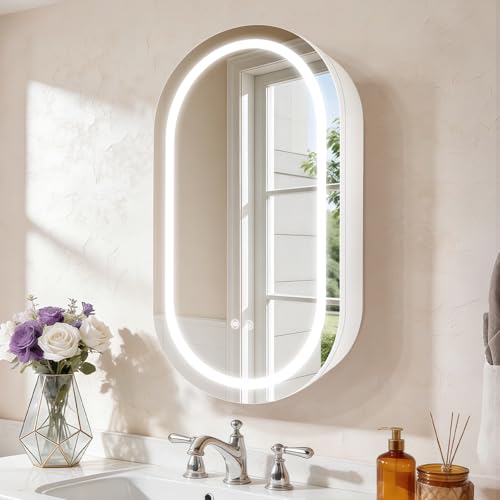
Janboe Oval Medicine Cabinet with
The anti-fog LED ring keeps the glass clear through a hot shower, and the smooth oval door has no seams to trap the film an ammonia cleaner leaves behind. A vinegar wipe is all it needs.
$249.99
Check Price on Amazon
Best Value
USHOWER Bathroom Mirror for Over
This budget storage mirror fits neatly over a toilet tank and uses plain float glass with no tinted coating, so a basic vinegar-and-water spray cleans it just as well as anything ammonia-based.
$53.99
Check Price on Amazon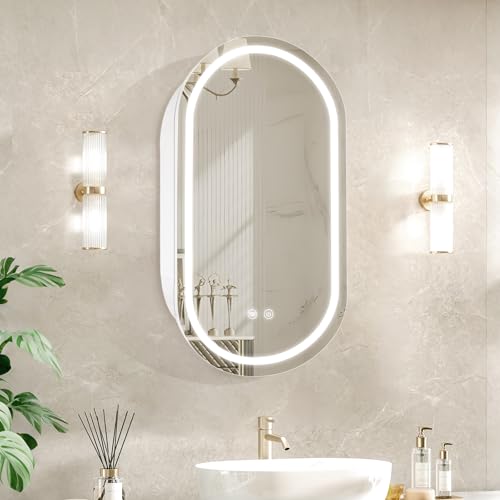
Premium Choice
Janboe Capsule Shape Medicine Cabinet
The built-in defogging pad clears condensation fast after a shower, and the capsule-shaped glass wipes streak-free with the same ammonia-free routine you would use on any bathroom mirror.
$159.99
Check Price on AmazonFrequently Asked Questions
Why should I avoid Windex on a bathroom mirror?
Windex and other ammonia glass cleaners can cloud anti-fog coatings, discolor gold or brass frame finishes, and leave a sharp smell in a small bathroom. A vinegar-and-water solution cuts through the same soap scum and toothpaste film without any of those risks.
What can I use instead of Windex to clean a mirror?
Mix equal parts white vinegar and distilled water in a spray bottle, then add a spoonful of rubbing alcohol if you deal with hairspray or greasy fingerprints. Spray the cloth rather than the glass, wipe top to bottom, and buff dry with a second microfiber cloth.
Does vinegar leave streaks on mirrors?
Vinegar itself does not streak glass. Streaks come from spraying the mirror directly, using tap water instead of distilled, or skipping the dry buff at the end. Follow the two-cloth method and a vinegar solution cleans just as clear as any ammonia spray.
Is it safe to mix vinegar and rubbing alcohol?
Yes, vinegar and rubbing alcohol mix safely and the combination evaporates faster than vinegar alone, which helps prevent water spots. Never combine either one with bleach, though. That mix releases toxic fumes and has no place in a bathroom cleaning routine.
How often should I clean my bathroom mirror without Windex?
A quick weekly wipe with the vinegar solution keeps most bathroom mirrors clear. If yours sits above a busy sink or fogs after every shower, a light pass every few days stops splatter and water spots from building into a film that takes real scrubbing to remove.
Verdict
Once you know how to clean bathroom mirror without Windex, the job takes about fifteen minutes and skips the ammonia fumes entirely. The method comes down to five moves: dust the glass dry, mix a vinegar-and-distilled-water solution, spray the cloth instead of the mirror, wipe top to bottom in overlapping strokes, and buff dry with a second cloth while checking your work in raking light. Add rubbing alcohol only as a spot treatment, and never combine it or vinegar with bleach.
If your mirror still fogs or clouds no matter how carefully you clean it, an anti-fog model like the Janboe Oval Medicine Cabinet stays clear through a hot shower and cuts your cleaning down to an occasional quick wipe. Either way, the technique above keeps whatever mirror you own looking clear and streak-free without a single bottle of Windex.