Best How to Hang Bathroom Mirror (2026) | Best Bathroom Mirrors
Prices and picks verified as of September 2026. Independent, reader-supported reviews.


Things to Know Before You Buy
- Weigh the mirror first. The weight decides the rest of the job: a 5-pound frameless panel hangs on clips, while a 40-pound LED mirror needs studs or rated toggle bolts.
- Know your wall. Drywall, plaster, and tile each take a different anchor and a different drill bit, so check what you are drilling into before you buy hardware.
- Mounting height matters. Most people hang the center of the glass 60 to 65 inches off the floor, with 5 to 10 inches of clearance above the vanity.
- Buy anchors with margin. Pick anchors rated well above the mirror's weight so the screws hold even if one point misses a stud.
- Plan around lighting and outlets. An LED or backlit mirror needs a power source nearby, so confirm the cord or junction box reaches before you drill.
Knowing how to hang bathroom mirror hardware correctly is the difference between a mirror that sits level for years and one that slips, cracks the tile, or pulls out of the drywall. The job itself is not complicated. You measure, you find solid wall, you set the right anchors, and you mount the glass. Most people finish in about half an hour with tools they already own.
The part that trips people up is matching the anchor to the wall and the mirror to its weight. A light frameless panel and a heavy backlit LED mirror call for different hardware, and bathroom walls often hide tile, plaster, or empty cavities where you expected a stud. The five steps below walk you through the whole process in order, from the first pencil mark to the final level check, so you only drill once and the mirror stays put.
What You'll Need
- Supplies: Wall anchors rated for your mirror weight, mounting screws, painter's tape
- Tools: Drill with masonry and standard bits, stud finder, level, tape measure, pencil, screwdriver
Step 1: Measure and mark the mounting height
Start by deciding where the mirror sits before you think about hardware. Measure the width of your vanity and find its horizontal center, then make a light pencil mark on the wall. Most people hang the center of the glass 60 to 65 inches off the finished floor, which lands at eye level for a wide range of heights. If the people using the bathroom are notably taller or shorter, adjust from there rather than following a fixed number.
Next, set the vertical position. Leave 5 to 10 inches of clearance between the bottom edge of the mirror and the vanity backsplash so the faucet, soap, and any sconce or light bar have room. Hold the mirror against the wall, or cut a paper template to its exact size, and shift it up and down until the spacing looks right. When you are happy with it, mark the top and bottom edges with painter's tape so you have a reference you can see from across the room.
Picture the finished layout when you plan how to hang bathroom mirror hardware at this height. A mirror that is an inch too high or off-center will nag at you every day, and once the anchors are in the wall, moving it means patching holes.
Step 2: Locate the studs and mark the anchor points
Run a stud finder slowly across the wall at your mounting height and mark the edges of every stud you cross. Studs usually sit 16 inches apart on center, so once you find one, you can predict where the next should be and confirm it. Anchoring at least one bracket screw into a stud gives a heavy mirror far more holding power than drywall alone, so note where the studs fall relative to your center mark.
Now transfer the mirror's mounting holes to the wall. Hold the bracket, cleat, or clip set against the wall at the height you marked in Step 1, rest a level on top of it, and adjust until the bubble is centered. With the hardware level, mark each screw hole with a pencil. For a cleat-style hanger, mark the full length of the bar and check it end to end with the level, since a long bar shows tilt more than a single bracket.
When you map out how to hang bathroom mirror hardware against the studs, line up as many screw points with solid wood as you can. Any holes that land between studs will get wall anchors in the next step, and that is normal for a mirror wider than 16 inches.
Step 3: Drill the holes and set the wall anchors
Match the bit to the wall. For drywall and plaster, a standard twist bit works fine. For tile, put a square of painter's tape over each mark to keep the bit from skating, then drill slowly with a carbide or diamond masonry bit and ease off the pressure as you break through the glaze. Drill each hole to the depth your anchor calls for, and clear the dust so the anchor seats fully.
For any screw point that hits a stud, you can drive the screw straight into the wood or drill a small pilot hole first. For points that land in hollow drywall, push or tap in a plastic anchor, or thread in a toggle bolt for heavier loads. Choose anchors rated above the mirror's weight, and remember that the rating drops in crumbly plaster, so size up when in doubt.
The anchor matters more than any other choice when you hang a bathroom mirror safely. A light frameless panel holds fine on basic plastic anchors, but a 30- or 40-pound LED mirror needs toggle bolts or stud screws, because an undersized anchor can pull free months later and bring the glass down with it.
Step 4: Attach the mounting hardware
Hold the bracket, cleat, or J-clips over your anchors and drive the screws in by hand or with the drill on a low torque setting. Snug each screw down so the hardware sits flush against the wall, but stop as soon as it is firm. Overtightening strips a plastic anchor or cracks tile, and a stripped anchor no longer holds the weight you sized it for.
Before you trust it, rest your level on the installed hardware one more time. A bracket can shift a fraction as you tighten the screws, and a long cleat shows even a small tilt once the mirror goes on. If the bubble is off, loosen the screws, nudge the piece back to level, and retighten. Give the hardware a firm tug to confirm nothing flexes or pulls away from the wall.
This is the stage where good prep in how to hang bathroom mirror brackets pays off. Hardware that is solid and dead level now means the mirror drops into place in seconds, and you won't fight to get the glass straight.
Lift the mirror and set it onto the hardware. For a cleat, lower the back channel onto the wall bar until it catches. For clips, slide the bottom edge into the fixed clips first, then swing the top in and lock the upper clips. Keep both hands on the glass until you feel it settle, and get a helper for anything wide or heavy so you are not balancing it one-handed.
Lay your level across the top edge and check the bubble. Small frameless mirrors on clips often allow a slight side-to-side adjustment, so shift the glass until it reads level and the gap above the vanity looks even. If you used a cleat, the mirror should already sit straight from your Step 4 check, and you only confirm it here.
Finish by securing any safety hardware. Many mirrors include a bottom clip, set screw, or J-bar lock that stops the glass from lifting off the wall if it gets bumped. Set those now, wipe the surface, and step back to confirm the mirror is level and centered. That final lock keeps the glass exactly where you put it.
Common Mistakes to Avoid
The most common error when people learn how to hang bathroom mirror hardware is guessing the weight and grabbing whatever anchors are in the junk drawer. A frameless panel forgives a light anchor, but a backlit LED mirror can weigh 30 to 40 pounds, and an undersized anchor pulls out of the drywall weeks later. Weigh the mirror, then buy anchors rated above that number.
Skipping the level is the second big one. Eyeballing the bracket feels faster, but a tilt you cannot see by eye becomes obvious the moment a straight mirror edge sits next to a level vanity. Rest the level on the hardware before and after you tighten the screws.
On tile, people drill too fast and crack the glaze, or they overtighten and split the tile around the screw. Slow down, use a masonry bit with tape over the mark, and stop tightening the moment the bracket sits flush.
Two more traps catch people often. They mount the mirror too high because they measured from the ceiling instead of eye level, and they forget the power source on a lighted mirror, then discover the cord cannot reach an outlet. Plan the height and the wiring before the drill ever touches the wall.
Our Top Picks
If you are still choosing a mirror to hang, these three cover the range most bathrooms need. The hardware and anchors in this guide work for all of them, though the heavier LED option asks for sturdier anchoring. Each one balances how easy it is to mount against price and looks.
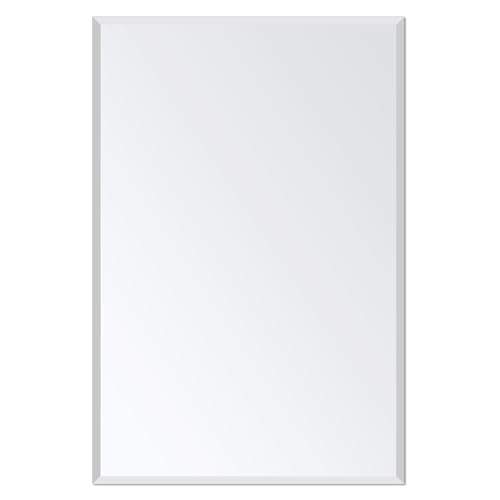
Editor’s Pick
Frameless Bathroom Mirror for Wall
A light frameless panel that mounts on simple clips, which makes it the easiest pick to hang and the most forgiving on basic drywall anchors.
$32.39
Check Price on Amazon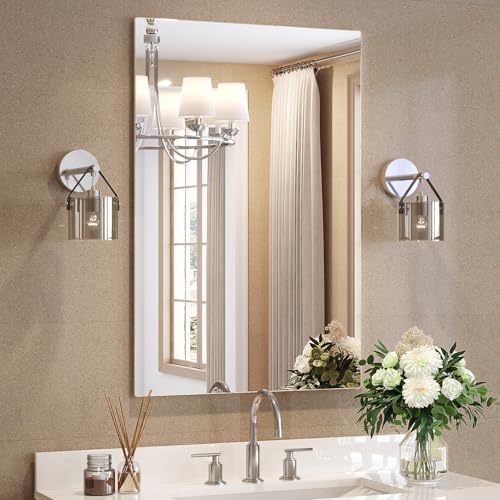
Best Value
Brightify Frameless Mirror 24x36 Inch
A 24x36 inch frameless mirror with clean polished edges and a straightforward bracket, giving you a larger reflective surface without a heavy install.
$69.99
Check Price on Amazon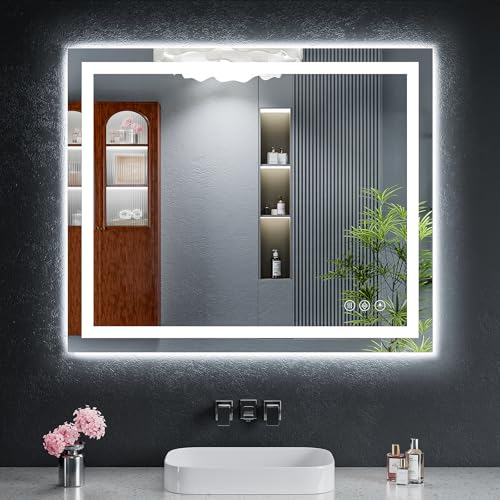
Premium Choice
36"x30" LED Bathroom Mirror with
A 36x30 inch backlit LED mirror for a spa look. Plan for the extra weight with rated anchors, and confirm a power source sits within reach.
$145.99
Check Price on AmazonFrequently Asked Questions
How high should you hang a bathroom mirror?
Center the mirror at eye level for the people who use the bathroom, which usually puts the middle of the glass about 60 to 65 inches off the floor. Leave 5 to 10 inches between the bottom edge and the vanity backsplash so the faucet and any light fixture have room.
Can you hang a bathroom mirror on tile?
Yes. Mark your points, cover each one with painter's tape so the bit does not wander, and drill slowly with a carbide or diamond masonry bit. Use plastic anchors or toggle bolts sized for tile, and stop tightening as soon as the bracket sits flush so you do not crack the glaze.
Do you need to hit a stud to hang a bathroom mirror?
You do not always need a stud, but anchoring into one adds real strength for heavy mirrors. When the bracket holes miss every stud, use wall anchors or toggle bolts rated above the mirror's weight so the screws grip the drywall securely.
How do you hang a heavy LED mirror?
Treat weight as the deciding factor. Drive at least one screw into a stud where you can, and use toggle bolts rated above the mirror's weight for the rest. Confirm a power source sits within reach before you drill, and ask a helper to hold the glass while you lock the hardware.
Can you hang a bathroom mirror without drilling?
You can for light frameless panels using heavy-duty mounting adhesive or mirror-mounting strips, as long as the wall is clean, dry, and smooth. Skip the adhesive route for anything heavy or for a lighted mirror, because those need mechanical anchors to stay safely on the wall.
Verdict
How to hang bathroom mirror hardware comes down to five steps: measure the height, find the studs, set anchors that beat the mirror's weight, mount the bracket dead level, and lock the glass in place. Get the anchor right and the rest follows, because the wall, not the bracket, is what fails when a mirror falls. For most bathrooms, a light frameless panel like the Ruomeng Frameless Bathroom Mirror is the easiest place to start, since it hangs on simple clips and forgives basic drywall anchors. Step up to the Brightify 24x36 for more reflective surface, or the MYSUNORIA LED mirror if you want backlighting and are ready to use rated anchors and plan for power. Whatever you choose, weigh it first, use a level twice, and slow down on tile. Half an hour of careful work buys you a mirror that sits straight and stays put for years.