Best Way to Clean Bathroom Mirrors without Streaks: Complete Guide (2026)
Prices and picks verified as of September 2026. Independent, reader-supported reviews.


Things to Know Before You Buy
- Cleaner matters less than technique. Ammonia-based glass cleaner or a water and vinegar mix both work, but spraying the cloth instead of the mirror and wiping in straight lines is what actually prevents streaks.
- Paper towels are the enemy of a clear mirror. They shed lint that shows up as streaks. Microfiber cloths, an old cotton T-shirt, or a coffee filter leave nothing behind.
- Hard water spots need an acid, not a glass cleaner. Undiluted white vinegar dissolves mineral deposits before a standard spray will leave the glass clear.
- A daily wipe beats a weekly scrub. Drying condensation right after a shower stops water spots from forming in the first place.
- Some haze is not a cleaning problem. Degraded anti-fog coating or edge de-silvering looks like a streak but will not come off, no matter the cleaner.
The best way to clean bathroom mirrors without streaks is mostly about what you clean with, not how hard you scrub: the right solution, a lint-free cloth, and a wipe that clears moisture instead of pushing it around the glass. Steam from hot showers, toothpaste splatter, and hard water spots build up fast in a small bathroom, and a quick wipe with a paper towel usually just smears that residue into a hazy film. Switch the tools and the technique, and most mirrors come back to a clear, streak-free finish in under two minutes.
Bathroom mirrors take more abuse than any other glass surface in the house. Hot showers coat them in condensation, hairspray and toothpaste leave a fine film, and hard water minerals etch spots that regular glass cleaner cannot always lift on their own. A mirror over a vanity with daily hair and skincare routines gets dirty again within a day, so the method needs to be fast enough to repeat often, not only effective the first time.
Most streaking comes down to a mismatch between the cleaner and whatever is actually on the glass, or a cloth that puts back what it just picked up. There's also a point where cleaning stops helping at all: a mirror with degraded coating or permanent haze usually needs replacing rather than another round of glass cleaner.
What You Need to Know
Most streaking on a bathroom mirror comes from leftover residue, not leftover moisture. Spray cleaner sits on the glass, and if you wipe it with a cloth that already carries lint, oil, or old cleaner residue, you redistribute that film into new streaks instead of removing it. The best way to clean bathroom mirrors without streaks starts with matching the cleaner to what is actually on the glass, then finishing with a cloth that will not add its own residue back.
For everyday grime like toothpaste flecks, hairspray mist, and finger smudges, a standard ammonia-based glass cleaner or a simple mix of water and a few drops of dish soap breaks down the film on contact. For the white, chalky spots that form near faucets and on mirrors above a humid shower, hard water minerals are the culprit, and they need a mild acid such as diluted white vinegar to dissolve before a glass cleaner can leave a clear finish.
The cloth matters as much as the cleaner. Paper towels are made from wood fibers that shed lint and leave faint streaks under bathroom lighting. Microfiber cloths, an old cotton T-shirt, or even a coffee filter pick up moisture and residue without leaving fibers behind. Keep one cloth dedicated to glass only, since a cloth that has touched countertop cleaner or lotion will transfer oils back onto the mirror on the next pass.
Types and Categories
Not every mark on a bathroom mirror responds to the same treatment, and knowing which category you are dealing with saves time. Everyday film, the light haze from steam, hairspray, and toothpaste, wipes away with almost any glass cleaner or a vinegar and water mix, since it sits on top of the glass rather than bonding to it.
Hard water spots are a different category. These chalky white rings form where mineral-heavy water dries on the surface, usually near a sink splash zone or on a mirror close to a shower. They need an acidic cleaner, undiluted white vinegar or a commercial hard water remover, left on the spot for a minute or two before wiping.
Soap scum and lotion residue fall into a third category. These oily films come from hands touching the mirror after applying moisturizer or from splashback near the sink, and they need a degreasing cleaner, dish soap diluted in water works well, rather than a plain glass spray that smears the oil around instead of lifting it.
A fourth category, and the one no cleaner fixes, is coating damage. Anti-fog mirrors and some LED-lit vanity mirrors have a thin coating on the glass that can cloud or peel with age or with abrasive cleaners. Once that coating degrades, the haze is permanent, and no amount of the best way to clean bathroom mirrors without streaks will restore clarity. That is the point where replacing the mirror makes more sense than continuing to clean it.
How to Choose
Choosing the right cleaning approach depends on the mirror itself, not only on the mess covering it. A frameless mirror glued directly to the wall tolerates more liquid cleaner, since there is no wood trim to warp or metal frame to corrode if a little runs down the edge. A framed mirror needs a different approach: spray the cleaner onto the cloth first, never directly onto the glass, so liquid does not seep behind the frame and loosen the adhesive or stain the trim.
LED and lighted mirrors add another consideration. These have wiring and touch-sensor controls built into the frame or behind the glass, so avoid soaking the edges or spraying near any visible seam, switch, or USB port. A barely damp microfiber cloth handles daily cleaning on these without risking the electronics, and unplugging the mirror before any deeper clean around the frame is worth the extra step.
Match the cleaner to how often you clean. Wipe the mirror down every few days, and a light water and vinegar mix or a few drops of dish soap in water is enough, without building up its own residue over time. Clean weekly or less, and a stronger ammonia-based glass cleaner cuts through the accumulated film faster and needs less scrubbing.
Consider the frame finish too. Matte black, brass, and painted frames can spot or discolor from ammonia overspray, so a vinegar-based cleaner or a cloth-only application protects the finish better than a direct spray. Testing a small corner first, especially on antique or tinted glass, confirms that the best way to clean bathroom mirrors without streaks in your bathroom will not leave marks on the frame.
Common Mistakes to Avoid
The most common mistake is spraying cleaner directly onto the mirror instead of onto the cloth. Direct spray runs down behind a framed mirror, pools at the bottom edge, and can loosen adhesive or leave a permanent line where moisture seeped behind the glass over time.
Wiping in circles causes more streaking than it fixes. Circular motions spread residue evenly across the glass instead of pushing it toward an edge, so leftover film ends up thinner across the surface instead of removed. Straight, overlapping passes from top to bottom make it obvious where a streak remains so you can go back over that one spot.
Using paper towels or old bath towels also works against a streak-free finish. Paper towels shed fibers, and towels washed with fabric softener carry a residue that transfers straight onto the glass. A cloth used only for mirrors, never for countertops or hands, avoids reintroducing oil and lint.
Skipping the drying step is the last common error. A mirror left to air dry keeps evaporating water into new spots as it dries, especially with hard water, so a final dry pass with a clean section of the cloth right after wiping is what actually leaves the glass streak-free instead of only clean.
Care and Maintenance
A quick daily habit does more for a streak-free mirror than any deep clean. Wiping it down with a dry microfiber cloth right after a shower, while the room is still warm, catches condensation before it dries into water spots and takes about fifteen seconds.
A squeegee mounted near the mirror works the same way it keeps glass shower doors clear: one pass after the last shower of the day removes most of the moisture that would otherwise leave hard water marks by morning. That single step cuts down how often a full clean with vinegar or glass cleaner is needed.
Running the bathroom fan during and for twenty minutes after a shower reduces the humidity that fogs the mirror and speeds up mineral buildup on the glass. Less condensation settling on the surface means less residue to wipe away later, and it protects any anti-fog coating on LED mirrors from repeated moisture exposure.
For weekly maintenance, a full clean with the cleaner matched to your water hardness, plain glass cleaner for soft water, a vinegar-based one for hard water, keeps mineral deposits from building into spots that need heavier scrubbing. Staying ahead of buildup is easier than removing it once it sets, and that's what separates a mirror that looks clear every day from one that only looks clear right after cleaning.
Our Top Picks
If cleaning no longer clears the haze because the coating or the silvering behind the glass has degraded, these mirrors are a reasonable starting point for a replacement.
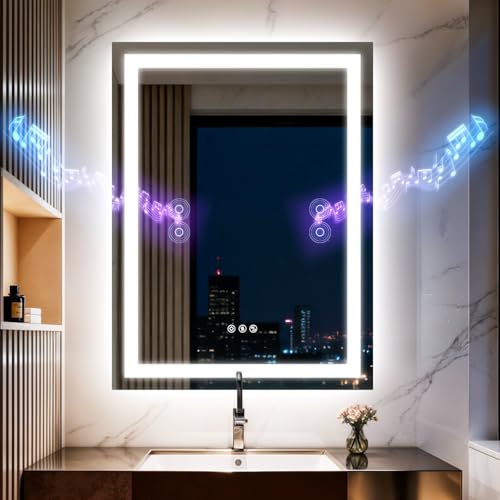
Editor's Pick
Olyvren 20"x28" LED Bathroom Mirror
Reviewers point to the built-in LED lighting and anti-fog pad as an upgrade over a plain mirror that fogs every time the shower runs.
$129.99
Check Price on Amazon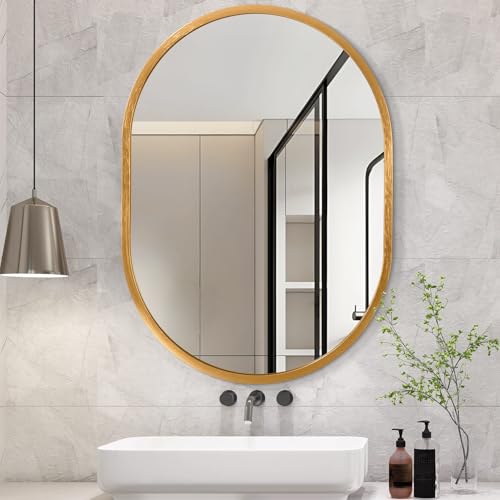
Best Value
JJUUYOU Oval Bathroom Mirror Wall
A frameless oval design at a low price, well suited to anyone replacing a clouded mirror without needing built-in lighting.
$38.99
Check Price on Amazon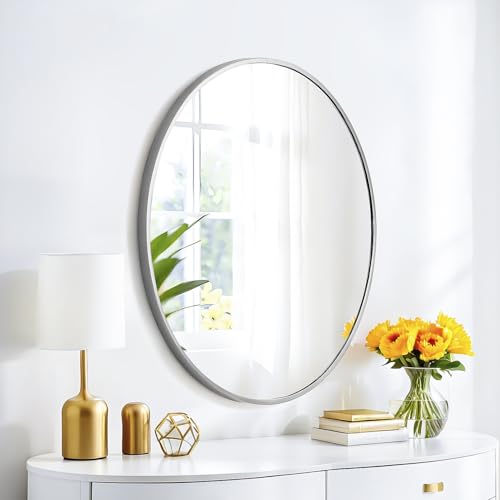
Premium Choice
SCWF-GZ 20x30 Oval Mirror Round
Owners report the rounded oval frame fits smaller vanities where a rectangular mirror would overhang the edges.
$39.99
Check Price on AmazonWhat is the best way to clean bathroom mirrors without streaks?
Spray a lint-free cloth, not the mirror, with an ammonia-based glass cleaner or a water and vinegar mix, then wipe in straight lines from top to bottom and finish with a dry pass on a clean section of the cloth.
Why do paper towels leave streaks on mirrors?
Paper towels are made from wood fibers that shed lint onto the glass, and that lint catches the light and looks like a streak once the surface dries.
Frequently Asked Questions
What is the best way to clean bathroom mirrors without streaks?
Why do paper towels leave streaks on mirrors?
How do you remove hard water spots from a bathroom mirror?
Is vinegar or ammonia better for cleaning a bathroom mirror?
How often should you clean a bathroom mirror to avoid streaks?
Verdict
The best way to clean bathroom mirrors without streaks is not a single product, it is a routine: spray a lint-free cloth instead of the glass, match the cleaner to the residue, wipe in straight overlapping lines, and finish with a dry pass. Ammonia-based cleaners handle everyday hairspray and toothpaste film, while diluted white vinegar dissolves the hard water spots that plain glass cleaner leaves behind. A daily wipe with a microfiber cloth after showers prevents most of the buildup that causes streaking in the first place, which means less scrubbing on cleaning day. When a mirror stays hazy no matter the cleaner or the cloth, the coating or the silvering behind the glass has likely failed, and that calls for a replacement rather than another bottle of cleaner. The Olyvren LED mirror above is a straightforward option once that point is reached, since its anti-fog pad reduces the condensation that caused the original streaking problem.